Jinnoro
Guides · Students · 6 min read
Plan literature reviews as a PhD student
Turn a mountain of papers into themes, reading steps and notes you actually write.
A literature review means reading far more than you can remember. What saves you is a system: papers sorted into themes, a clear idea of what you have read and what you still have to write about, and small reading steps.
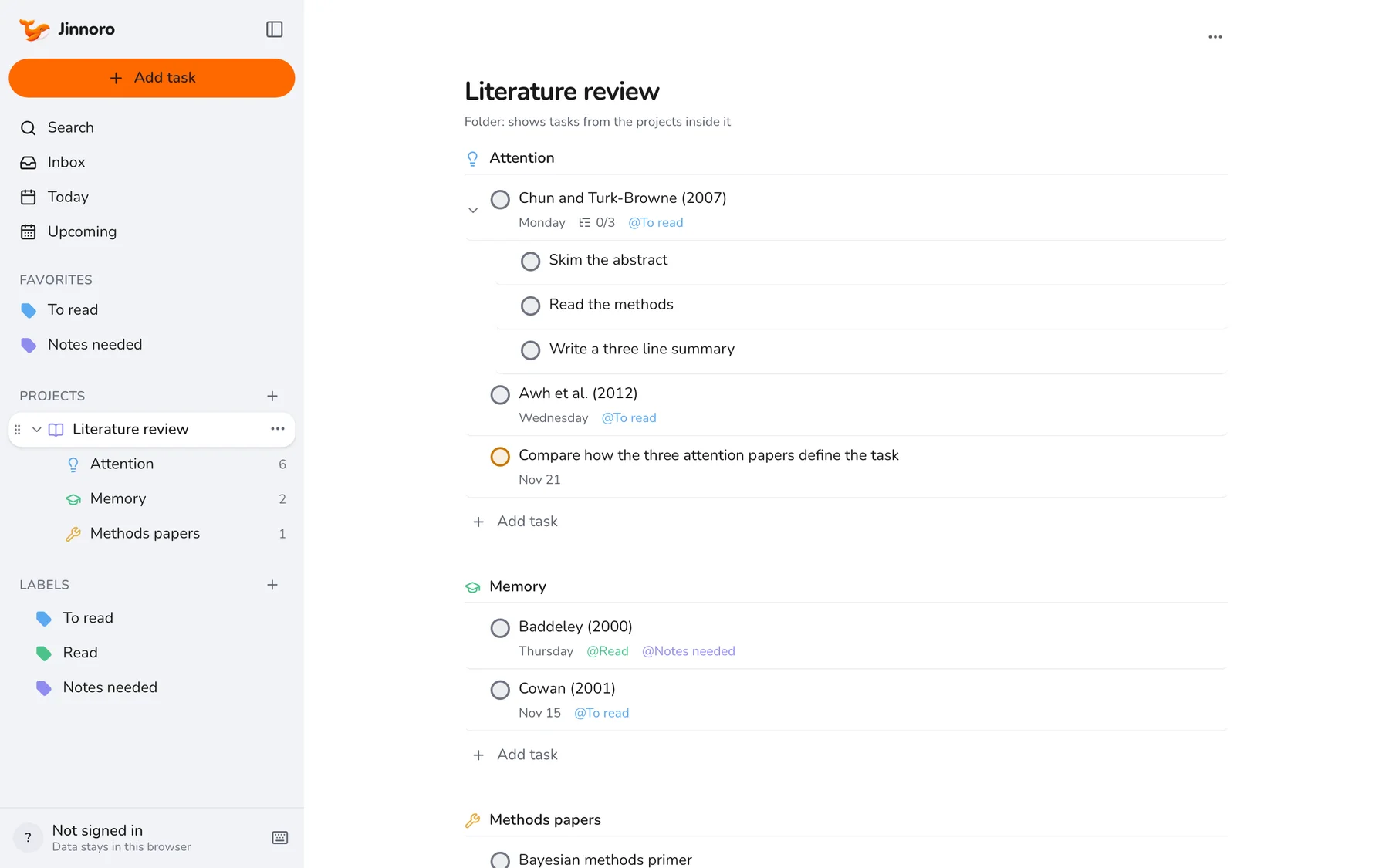
This guide uses a folder with one project per theme, and labels To read, Read and Notes needed.
Step 1
Group papers into themes
Make a project called Literature review with one subproject per theme, such as Attention, Memory and Methods papers. Add each paper as a task, named by authors and year.
Step 2
Read a paper in three small steps
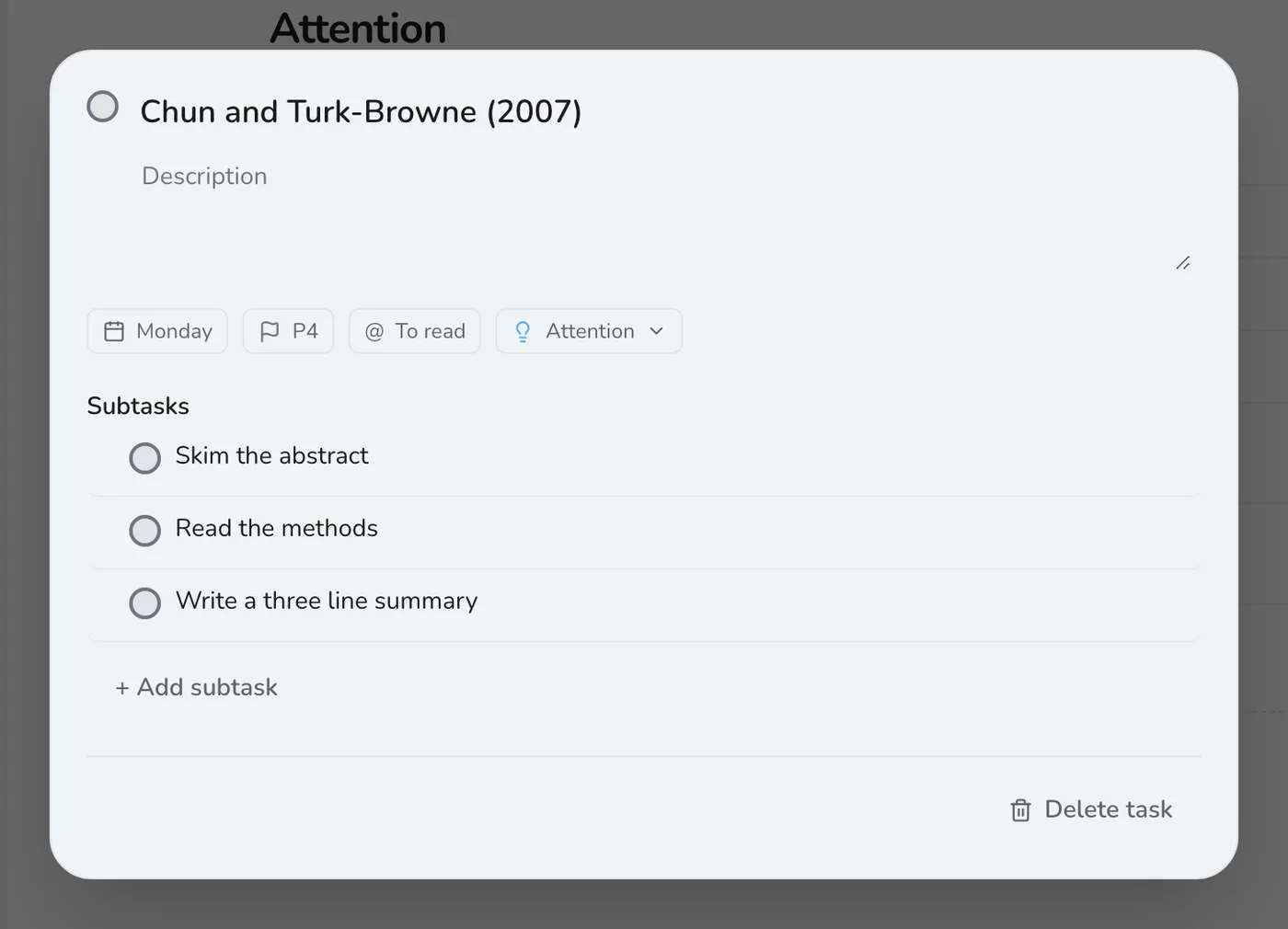
A paper is easier to start if the first step is small. Open the paper's task and add subtasks: skim the abstract, read the methods, write a three-line summary. You can stop after the first one and still have made progress.
Step 3
See what is still unread
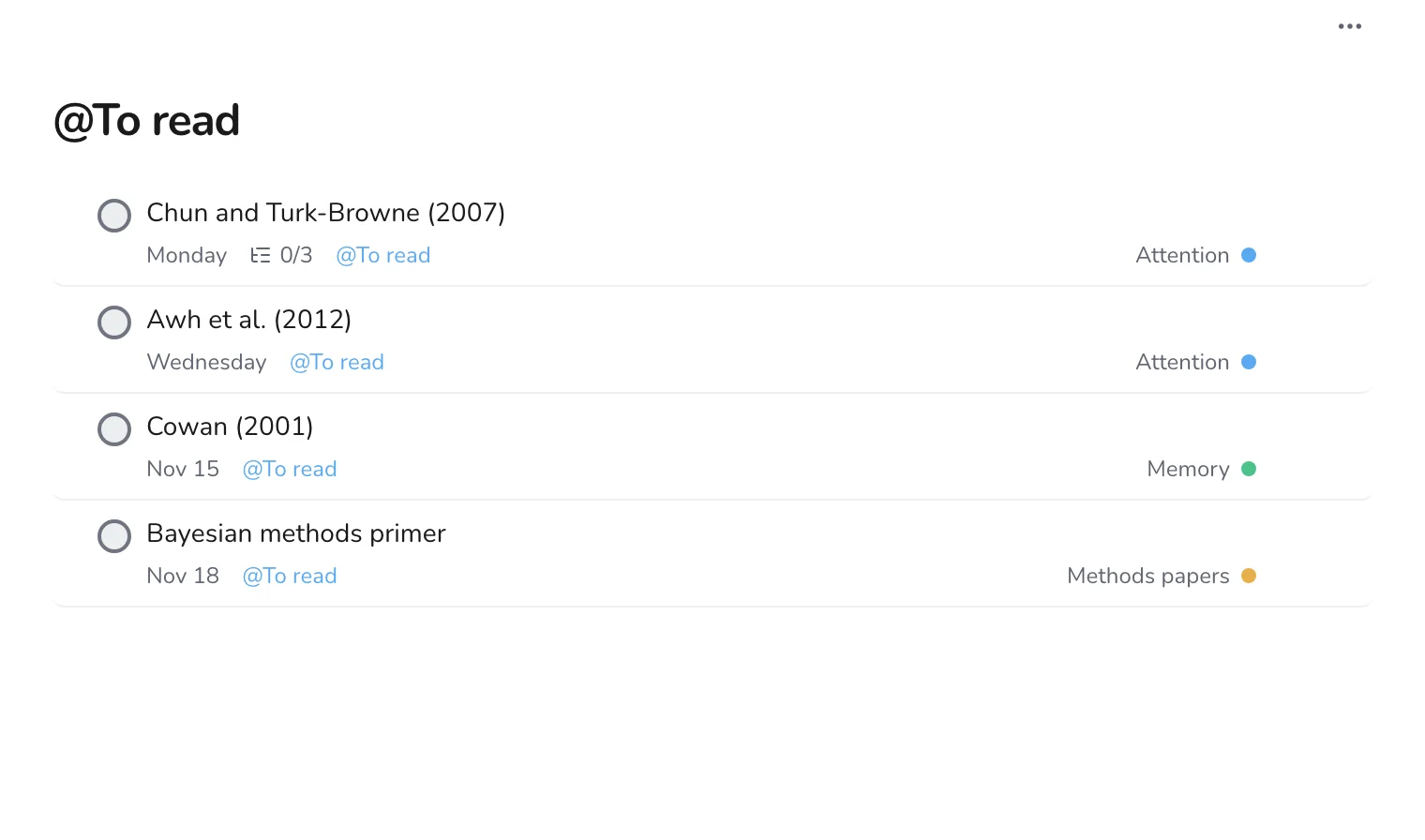
Add To read to papers you have found but not opened. The label page shows the whole queue, with dates and themes.
Step 4
Write the notes while it is fresh
Change the label to Notes needed when you have read a paper but not summarized it. Clear that label weekly. Notes written a month later are worth far less.
Step 5
Add papers as you find them
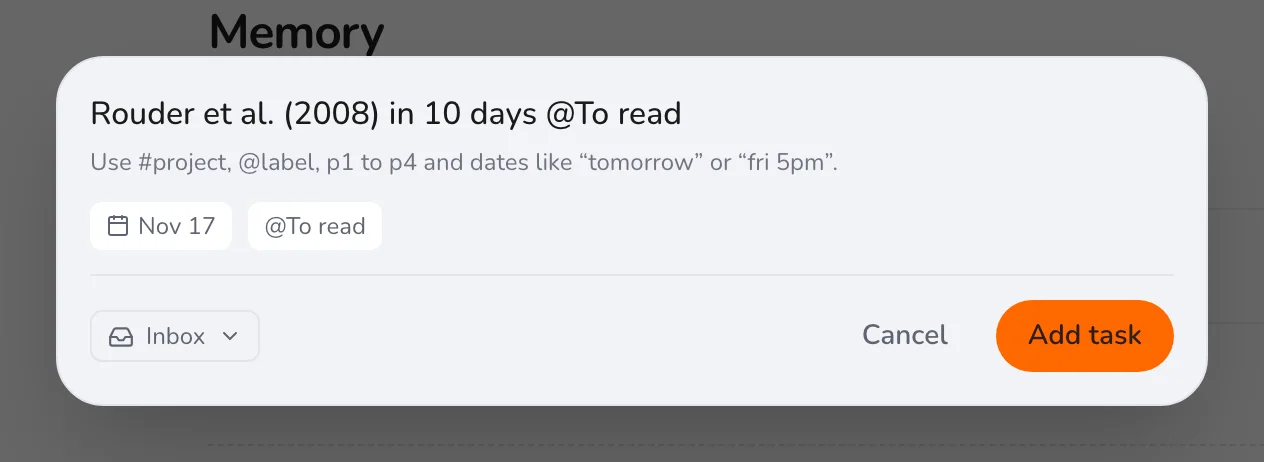
When a reference leads to a new paper, press Q, type the citation with # and the theme, add a date and @To read.
Add a synthesis task for each theme, such as “Compare how the three attention papers define the task”, so the reading leads to writing. For the writing itself, see planning a thesis one section at a time.